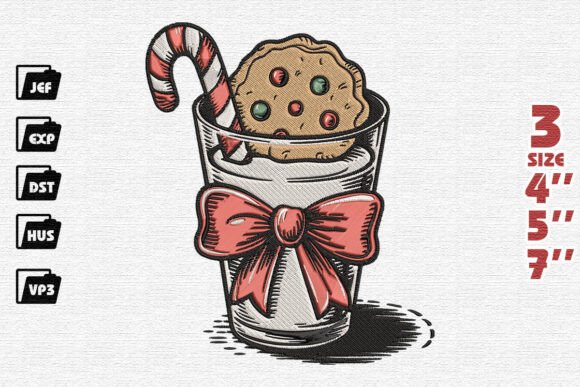
Retro Christmas Milk and Cookies for Santa Embroidery Design
As a professional embroidery designer who has spent years refining designs for small business merchandise, I approach every new digital file with a critical eye. The market is saturated with generic holiday graphics, but finding a piece that balances nostalgia with commercial viability is rare. Today, I am reviewing the Retro Christmas Milk and Cookies for Santa Embroidery Design. This isn't just a cute image; it is a potential brand asset for boutiques, bakeries, cafes, and handmade shops looking to elevate their small business merch during the holiday season.
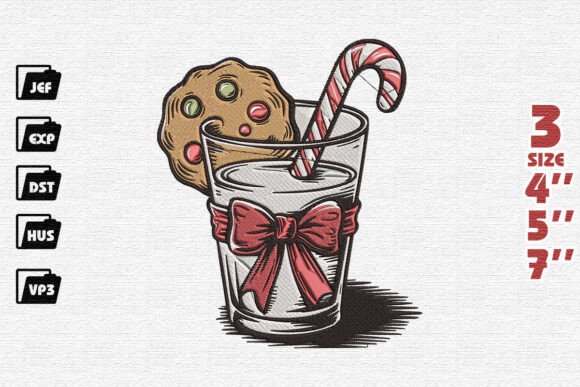
The first impression of this design is one of warm, classic charm. The description highlights a glass of milk tied with a beautiful red ribbon, capturing the essence of the old-fashioned tradition of leaving treats for Santa. In my experience, this "retro" aesthetic is currently in high demand. It moves away from the overly modern or neon styles often found in mass-produced items, offering instead a rustic, premium feel that resonates deeply with customers who value authenticity. For a brand identity built on craftsmanship, this design offers a visual personality that feels both friendly and established.
Real-World Application for Small Business Assets
When evaluating an embroidery file for commercial use, I immediately visualize where it will live on a product. The Retro Christmas Milk and Cookies for Santa Embroidery Design possesses a balanced composition that makes it incredibly versatile across various mediums. It is not merely decorative; it functions as a powerful branding tool when executed correctly.
Consider a local bakery or café. This design would shine brilliantly as an apron embroidery accent for staff. A chest logo featuring this motif creates an immediate connection with customers, signaling warmth and hospitality. Furthermore, it serves as an excellent candidate for custom hats. The circular nature of a retro-style glass and ribbon works well on the curved front panel of a cap, creating a cohesive look without overwhelming the wearer's face.
For online sellers and Etsy creators, this design is a goldmine for tote bag design projects. A canvas tote featuring this embroidered patch or direct stitch work becomes a walking advertisement for your shop. Additionally, imagine this as a branded product add-on. You could attach a small version of this design to product packaging accents or gift tags, turning a simple purchase into a memorable unboxing experience. It transforms standard inventory into a handmade product that feels curated and special.
Strategic Use on Uniforms and Patches
The versatility of this design extends to embroidered patch creation. Many small businesses prefer patches because they can be applied to multiple surfaces—uniforms, denim jackets, or even pet gear. If you are running a creative studio or a florist shop, using this as a sleeve detail adds a touch of seasonal flair without compromising the professional look of your staff uniforms. It acts as a subtle nod to the holidays rather than a loud costume piece.
However, success depends on execution. When used as a custom apparel item, the design must maintain its integrity. The red ribbon mentioned in the description provides a strong focal point, which is crucial for visibility. Whether you are producing event merch for a holiday market or creating limited edition items for your own brand, this design helps establish visual consistency. It tells a story of tradition and care, which directly influences customer trust and engagement.
Technical Considerations and Potential Pitfalls
While the artistic merit is clear, a professional review must address the technical realities of production. Not all fabrics and machines handle every design equally. There are specific areas where the Retro Christmas Milk and Cookies for Santa Embroidery Design requires careful handling to ensure a finished product that meets quality standards.
- Small Patch Sizes: If you intend to create tiny patches for keychains or small labels, you must verify the stitch density. Intricate details in a retro style can become muddy if scaled down too far. Always test the design at the intended final size before mass production.
- Curved Surfaces: While caps are a great application, the curvature of the hat can distort straight lines. Ensure the digitizing accounts for the curve so the milk glass doesn't appear warped.
- Fabric Texture: On textured fabrics like heavy wool or coarse canvas, fine outlines might get lost. Smooth cotton or polyester blends usually yield the best results for this type of detailed artwork.
- Digital Embroidery File Specifications: Before purchasing or downloading, you must confirm the hoop size requirements. A design that fits in a 4x4 hoop is ideal for most home machines, while larger logos may require industrial equipment. Do not assume compatibility; check the specifications provided by the creator.
- Washing and Durability: For items like aprons or work shirts that undergo frequent washing, high stitch density is essential. However, too much density can cause fabric puckering. Review the thread colors and ensure they are colorfast to prevent bleeding during wash cycles.
Brand Identity and Professionalism
The choice of embroidery design significantly impacts how a brand is perceived. A sloppy or poorly stitched logo can undermine years of building customer trust. Conversely, a well-executed design elevates the perceived value of the product. The Retro Christmas Milk and Cookies for Santa Embroidery Design, with its nostalgic appeal, suggests a brand that cares about heritage and quality. This emotional connection is vital for commercial embroidery projects aiming to stand out in a crowded marketplace.
When integrating this into your design assets, consider how it pairs with your existing typography and color palette. Does the red ribbon complement your brand colors? Does the retro font (if any) match your overall aesthetic? Visual consistency is key to building a recognizable brand identity.
Practical Designer Notes for Production
Before committing to a large run of merchandise, follow these essential steps to ensure the machine embroidery design performs as expected. These tips come from years of troubleshooting failed stitches and disappointed clients.
- Test in Black and White First: Convert the design to grayscale to check the contrast levels. This ensures that the design remains legible regardless of the thread colors you choose later.
- Review Thread Color Contrast: The description mentions a red ribbon. Ensure this stands out against the background fabric. High contrast is necessary for the design to pop, especially on dark uniforms.
- Inspect Spacing: Check the spacing between elements. Tight stitching can lead to thread breaks, while loose spacing can result in a flimsy finish. Adjust the stabilizer accordingly to support the fabric during the process.
- Create a Printable Mockup: Before cutting fabric, generate a printable mockup to show clients or stakeholders. This allows for approval on placement and size, saving material costs.
- Confirm Commercial Licensing: Most importantly, verify the licensing terms. Ensure you have the right to sell products featuring this design. Using a personal license for commercial gain can lead to legal issues.
- Use Proper Stabilizer: The stability of the fabric is just as important as the design itself. Choose a cut-away or tear-away stabilizer based on the weight of your garment to prevent distortion.
In conclusion, the Retro Christmas Milk and Cookies for Santa Embroidery Design is a strong contender for small business owners looking to add a touch of holiday spirit to their inventory. Its blend of nostalgia and clean lines makes it suitable for a wide range of applications, from cap embroidery to boutique gifts. By paying attention to the technical details—stitch density, fabric texture, and proper stabilization—you can turn this digital file into a tangible asset that drives sales and enhances your brand's reputation. Whether you are an Etsy seller or a large-scale decorator, this design offers the flexibility needed to succeed in the competitive world of custom apparel.